Brachial Plexus Surgery in Ahmedabad by Dr. Aniket Dave
Microsurgical reconstruction of the brachial plexus for newborns with birth-related palsy and adults injured in road and bike accidents — where every week before surgery matters.
- Duration4 – 10 hours
- Recovery12 – 24 months of rehabilitation
- AnaesthesiaGeneral
- DowntimeArm supported in a sling for several weeks
The procedure, explained.
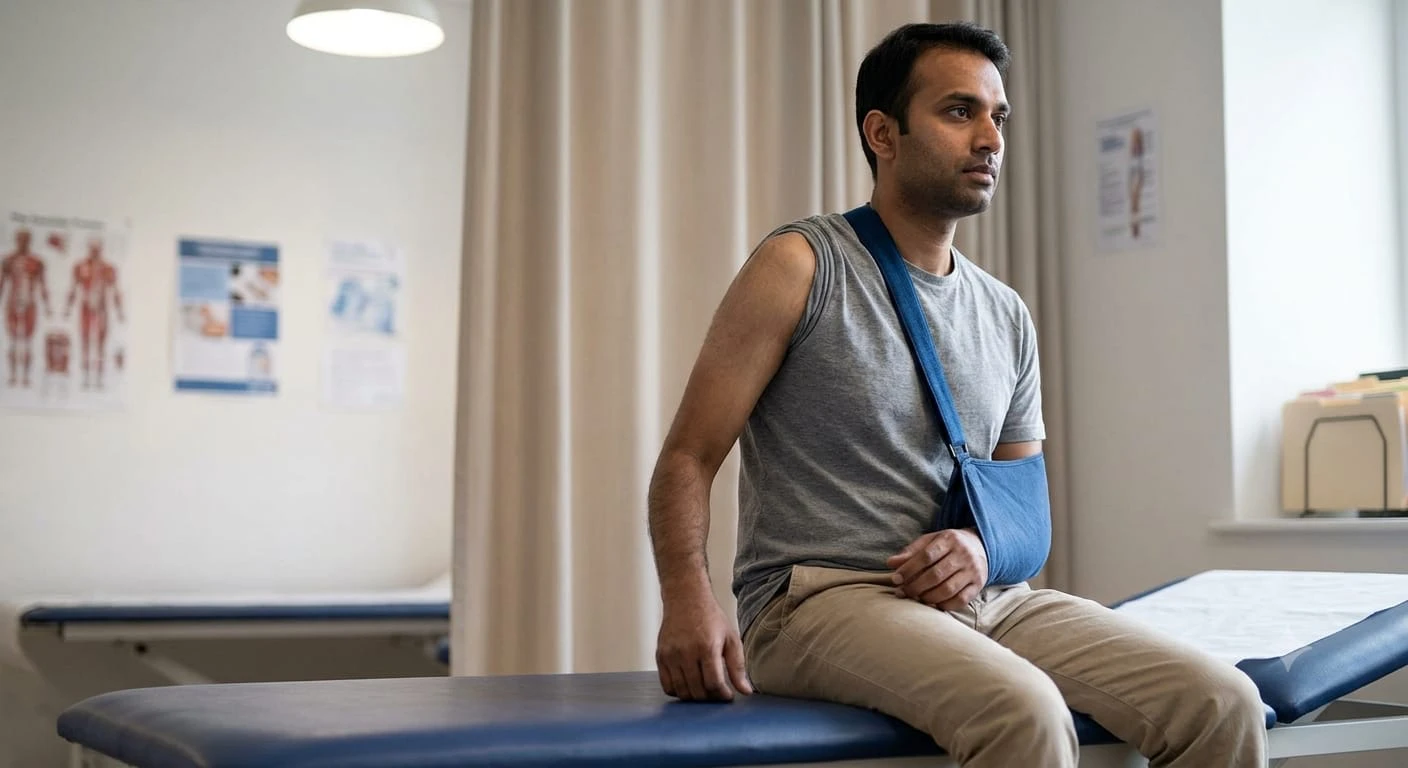
The brachial plexus is the bundle of nerves that travels from the spinal cord in the neck, through the shoulder, and down the entire arm — it is the wiring that lets you lift your shoulder, bend your elbow, rotate your forearm and grip with your hand. When this network is torn or crushed, the arm becomes partly or completely paralysed. Two groups of patients are affected. The first are newborns who sustain an obstetric (birth-related) brachial plexus palsy during a difficult delivery, leaving the affected arm limp. The second — very common on the roads of Gujarat — are adults thrown from a motorbike or scooter, who suffer a violent traction injury that stretches or avulses the nerves from the spinal cord. Brachial plexus surgery aims to restore signal to the muscles before they waste beyond recovery, using techniques such as nerve grafting, nerve transfers (rerouting a working nerve to power a paralysed muscle), free functioning muscle transfer, and later tendon transfers. It is among the most demanding fields in reconstructive microsurgery, and it is unforgiving of delay — a denervated muscle has a limited window before it can no longer be revived. Dr. Aniket Dave performs brachial plexus reconstruction in Ahmedabad with a clear, honest framework: act early, set realistic functional goals, and commit to the long rehabilitation that follows.
Is this procedure right for you?
Brachial plexus surgery is considered for infants and adults whose arm function has not recovered on its own — and the right time to be assessed is sooner than most people think.
- Newborn whose arm has not begun recovering by 1 – 3 months of age
- Infant who cannot bend the elbow against gravity by 3 – 6 months
- Adult with arm weakness or paralysis after a bike or road accident
- Loss of elbow flexion, shoulder movement or hand grip after trauma
- A flail, insensate arm following high-speed traction injury
- Persistent deficit despite several weeks of conservative care
- Failed or incomplete recovery from a previous nerve repair
- Stable enough for prolonged microsurgery and committed to rehabilitation
In nerve surgery, the calendar is the surgeon's hardest constraint.
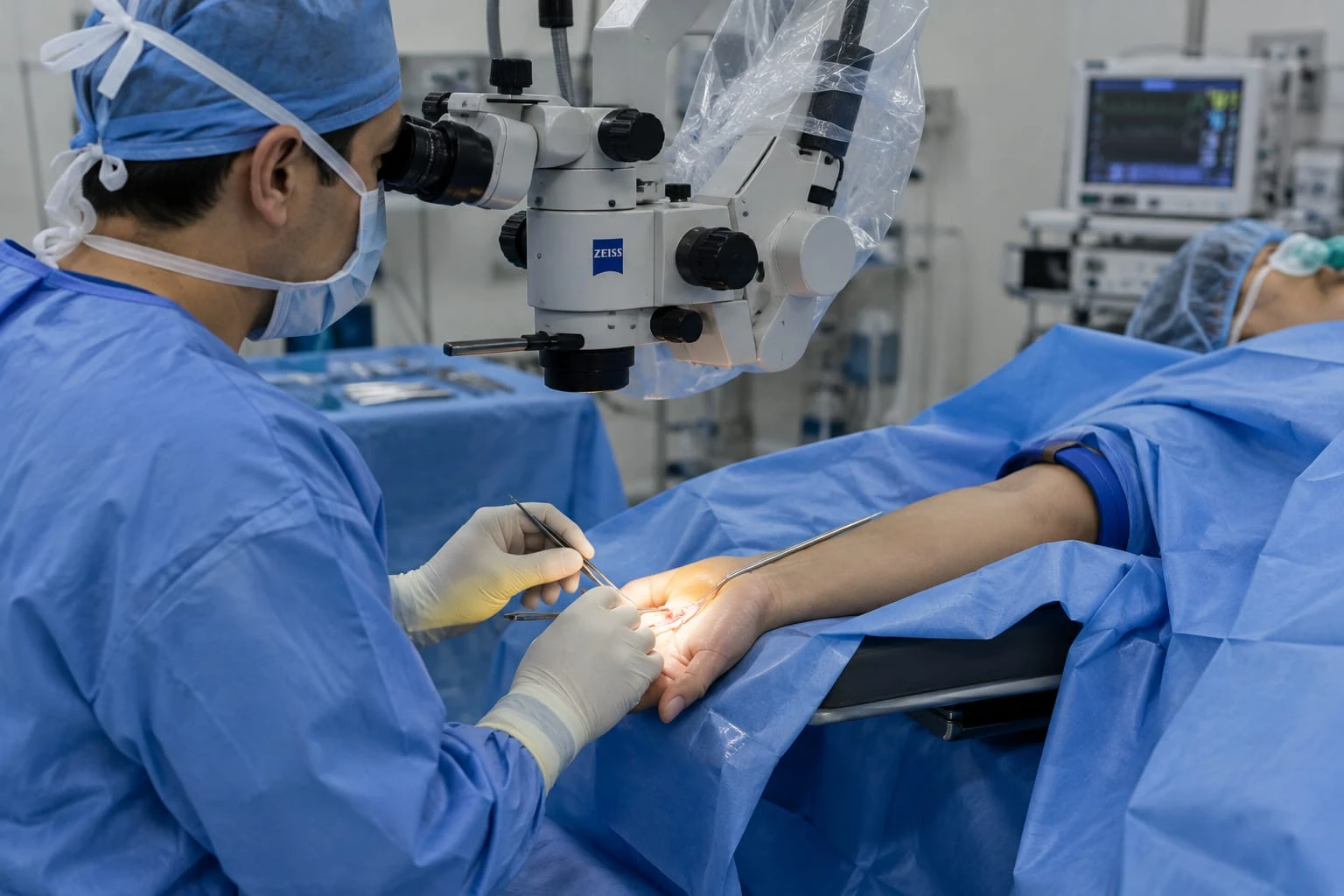
Nerves regrow slowly — roughly a millimetre a day — and a muscle that has lost its nerve supply will eventually scar down and become unsalvageable. This is why Dr. Dave treats brachial plexus referrals with urgency. For adult traction injuries, the best window for nerve grafting and nerve transfers is generally within three to six months of the accident; beyond that, the strategy shifts towards muscle and tendon transfers. For birth palsy, infants are monitored closely, and surgery is considered when natural recovery stalls. Every plan begins with a careful clinical examination, nerve conduction studies and high-resolution MRI of the plexus to map exactly which roots are torn, stretched or avulsed. From there, Dr. Dave prioritises the functions that matter most for a usable arm — elbow flexion first, then shoulder stability — rather than promising a full return that the biology cannot deliver. Surgery is performed under an operating microscope in a fully equipped theatre with consultant anaesthesia.
What happens on the day.
What a brachial plexus reconstruction involves, step by step.
- 01
Mapping the injury
Clinical examination, nerve conduction studies and MRI of the plexus to identify which nerve roots are ruptured, stretched or avulsed from the cord.
- 02
General anaesthesia
Administered by a consultant anaesthetist for a procedure that may last several hours. Long operations are planned and monitored carefully.
- 03
Exploration of the plexus
The nerve network is exposed through incisions in the neck and shoulder, and the true extent of the damage is confirmed directly.
- 04
Nerve grafting
Where a nerve is ruptured but the root is intact, a donor nerve (often the sural nerve from the leg) bridges the gap to re-establish a pathway.
- 05
Nerve transfers
Where roots are avulsed, a healthy expendable nerve is rerouted to power a key muscle — for example, an Oberlin transfer to restore elbow flexion.
- 06
Free functioning muscle transfer
In late or severe cases, a muscle is transplanted with its own blood supply and nerve to provide movement the original muscles can no longer give.
- 07
Closure and immobilisation
Fine microsurgical repairs are protected, the arm is supported, and a staged rehabilitation plan begins once healing allows.
A realistic recovery, day by day.
The repair is protected. The arm is rested in a sling and the surgical sites heal. Gentle, surgeon-guided movement is introduced gradually.
Physiotherapy focuses on keeping joints supple and preventing stiffness while the nerves are still regrowing — there is no visible movement yet, and that is expected.
The first flickers of muscle activity may appear as regenerating nerves reach their targets. Rehabilitation intensifies to train these early signals.
Functional strength builds. Patients learn to use newly powered muscles in daily tasks. Progress is real but gradual and requires persistence.
The final picture becomes clear. Secondary tendon transfers may be planned to refine grip, rotation or reach where useful.
Transparent pricing, no surprises.
Trauma cases are often covered by insurance. Range spans single nerve transfers to complex multi-stage reconstruction.
Brachial plexus surgery is costed case by case because no two injuries are alike — a single nerve transfer is a very different undertaking from a multi-stage reconstruction with nerve grafting and a free muscle transfer. Because most adult cases arise from road and bike accidents, they frequently qualify for health or motor insurance cover, and our team helps you navigate documentation and pre-authorisation. We provide a transparent, written estimate at consultation covering surgeon fees, anaesthesia, theatre charges, hospital stay and structured follow-up.
- Number of nerve roots involved and the extent of avulsion
- Technique — nerve graft, nerve transfer or free muscle transfer
- Single-stage versus multi-stage reconstruction
- Length of microsurgery and theatre time
- Duration of hospital stay and intensive monitoring
- Post-operative rehabilitation and physiotherapy needs
Honest pre-op disclosure.
Brachial plexus surgery is intricate, and its results are governed by biology as much as technique. Dr. Dave will set honest expectations with you before any decision is made.
- Incomplete recovery — surgery improves function but rarely restores a fully normal arm
- Slow, uncertain reinnervation that may take 12 – 24 months to declare itself
- Donor-site weakness or numbness from the nerve used as a graft or transfer
- Possibility that a denervated muscle has waned too far to be revived (the cost of delay)
- Bleeding, infection or wound problems (uncommon with sterile technique)
- Anaesthesia-related risks across a long procedure (screened pre-operatively)
6 specific commitments for brachial plexus surgery.
- M.Ch Plastic Surgery with dedicated training in reconstructive microsurgery
- Focused experience in both obstetric birth palsy and adult traumatic plexus injury
- Microscope-based nerve grafting, nerve transfers and free functioning muscle transfer
- Honest, function-first goal setting — no promises the biology cannot keep
- Urgent assessment pathway because early referral changes the outcome
- Coordinated rehabilitation and long-term follow-up through the full recovery
Questions patients ask about brachial plexus surgery.
You might also consider
A private conversation about what's possible.
Forty-five minutes with Dr. Dave. A clinical examination. 3D imaging where relevant. A written plan and transparent quote. No obligation, no upsell — just an honest discussion of your options.