Peripheral Nerve Surgery in Ahmedabad by Dr. Aniket Dave
Microsurgical treatment of damaged, compressed and painful nerves — decompression, direct repair, grafting and modern nerve transfers, all performed under the operating microscope to restore movement and relieve pain.
- Duration1 – 4 hours
- Recovery2 – 6 weeks for the wound; months for nerve regrowth
- AnaesthesiaRegional or general
- DowntimeDecompression: days. Repair/transfer: weeks
The procedure, explained.
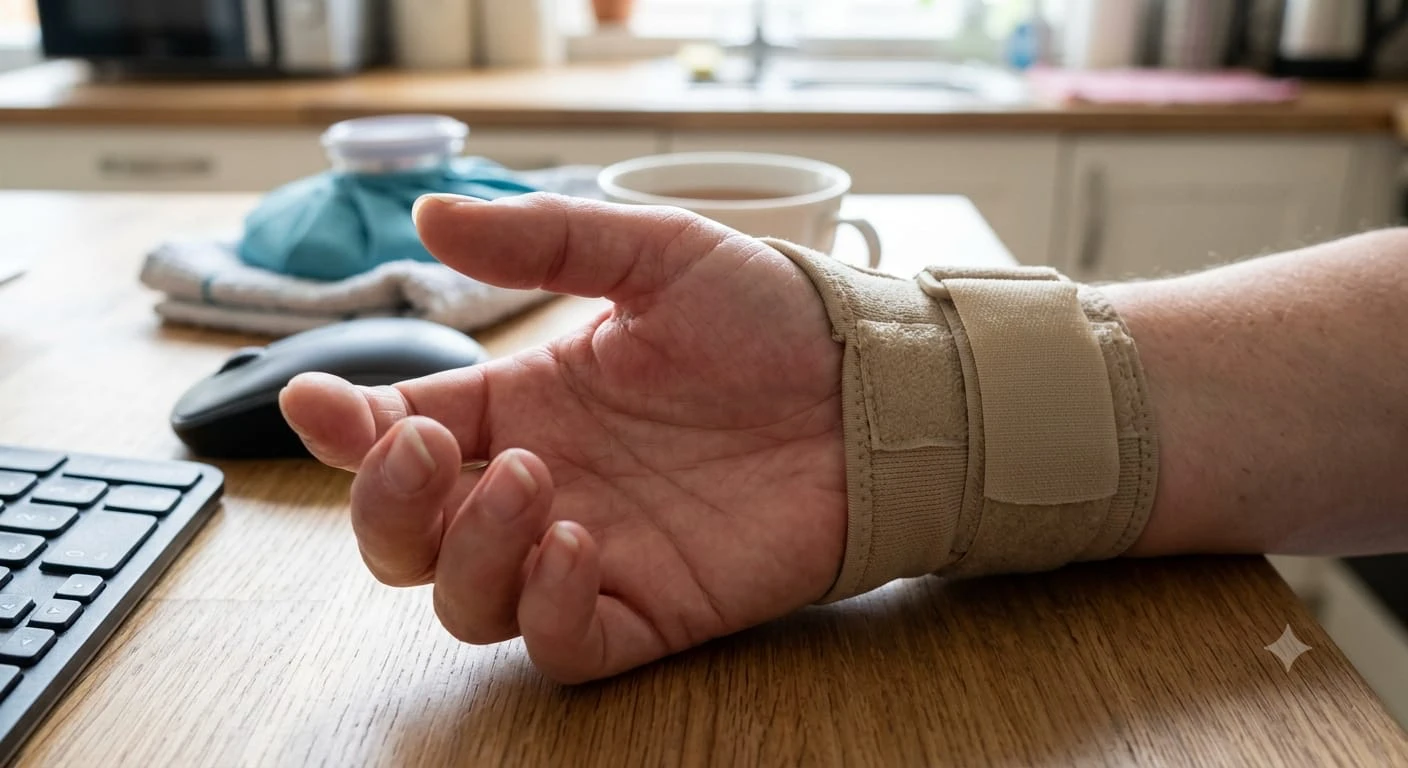
Peripheral nerve surgery treats the nerves that carry signals between the spinal cord and the rest of the body — the nerves of the arm, hand, leg and foot. When a nerve is crushed in a tunnel, divided by trauma, scarred into a painful lump, or invaded by a tumour, the result is weakness, numbness, tingling or relentless pain. The challenge with nerves is biology, not just technique: a divided nerve regrows at roughly one millimetre per day, so a forearm injury can take many months to reach the hand, and the muscle it serves will only recover if the nerve reaches it before that muscle wastes away. This is why timing matters so much — early, accurate surgery gives the best chance of meaningful recovery. Dr. Aniket Dave manages the full spectrum in Ahmedabad: releasing compressed nerves in carpal and cubital tunnel syndrome; repairing cut nerves directly end-to-end; bridging gaps with nerve grafts; rerouting a working nerve into a damaged one through modern nerve transfers; settling painful neuromas; and removing benign nerve tumours such as schwannomas. Every repair is performed under the operating microscope, where individual nerve bundles can be aligned with sutures finer than a human hair. The goal is honest and specific — to give back function where it can be given back, and to relieve pain that has not responded to other treatment.
Is this procedure right for you?
Nerve surgery is considered when a nerve is compressed, divided, scarred or invaded — and when function or pain justifies intervention.
- Carpal tunnel syndrome — night-time numbness, tingling and weakening grip
- Cubital tunnel syndrome — numb little and ring fingers, weak pinch
- A nerve cut by glass, machinery or a blade
- Persistent weakness or numbness after a fracture or dislocation
- A painful neuroma — a tender lump on a cut nerve, often after amputation
- Foot drop or wrist drop from nerve injury
- A slow-growing nerve sheath tumour such as a schwannoma
- Failed or incomplete recovery after an earlier nerve repair
Nerves recover on biology's timetable — so the surgery has to be right the first time.
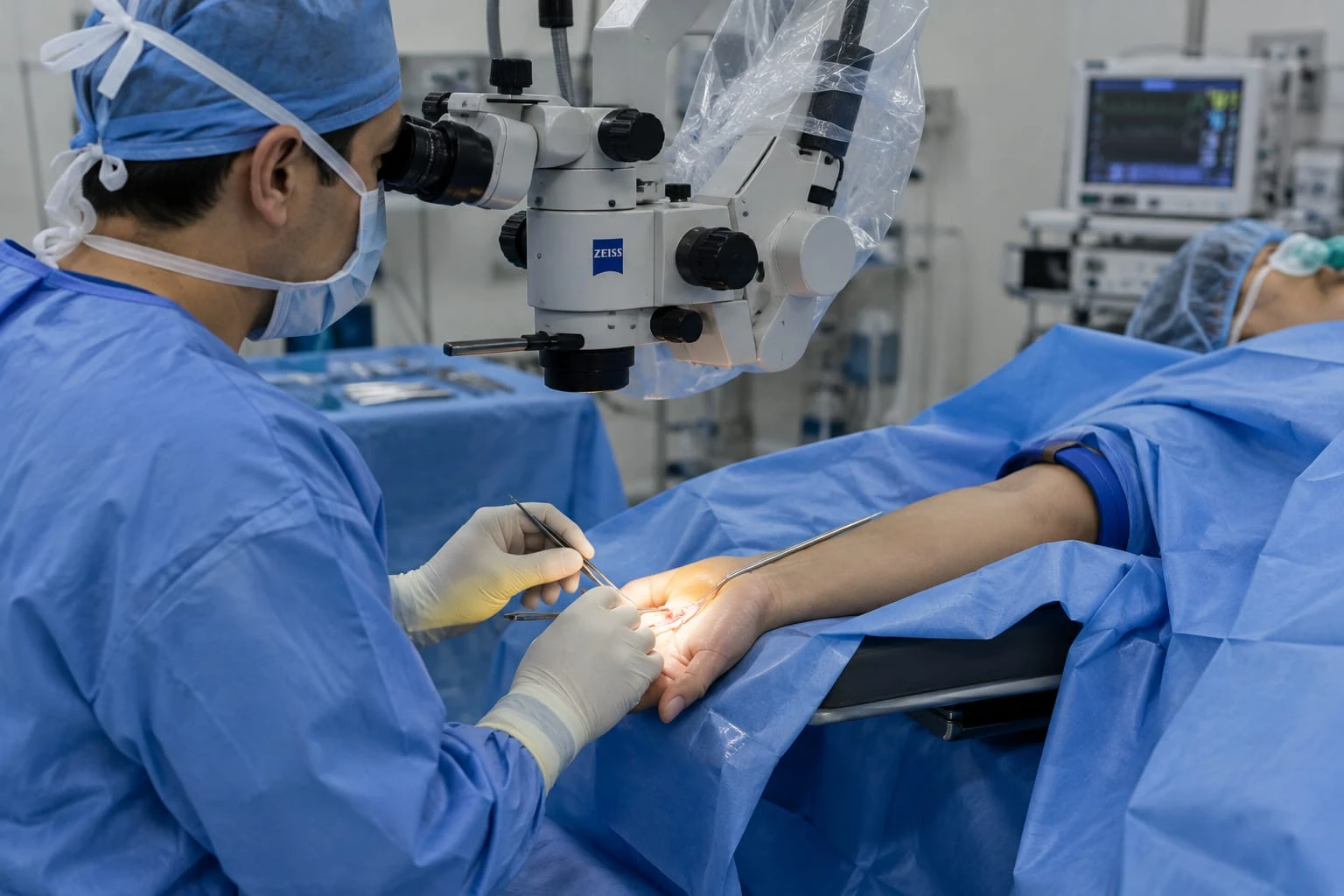
You cannot rush a nerve, but you can give it the best possible road to travel. Dr. Dave's approach begins with careful diagnosis — clinical examination, nerve conduction studies and, where needed, high-resolution ultrasound or MRI to locate the lesion precisely before any incision. In theatre, everything is done under the operating microscope: a tension-free repair, grafts taken from an expendable sensory nerve to bridge a gap, or a nerve transfer that borrows a redundant motor branch to power a critical movement far sooner than waiting for a slow proximal repair. For decompressions, the principle is the opposite — minimal, targeted release that frees the nerve and lets it settle. Surgery is performed in a JCI-grade theatre with consultant anaesthesia, and recovery is guided by structured hand therapy, because a technically perfect repair still needs months of guided rehabilitation to translate into usable function.
What happens on the day.
What happens on the day, step by step.
- 01
Mapping and marking
Final review of nerve studies and imaging, marking of the lesion and any graft donor site, and a calm pre-anaesthesia briefing.
- 02
Anaesthesia
Regional block for many hand and forearm cases, or general anaesthesia for longer reconstructions — chosen by a consultant anaesthetist.
- 03
Exposure
The nerve is approached through a planned incision and traced into healthy tissue above and below the area of damage or compression.
- 04
Decompression or assessment under the microscope
A compressed nerve is released; an injured nerve is inspected under magnification to judge whether direct repair, graft or transfer is needed.
- 05
Repair, graft or transfer
Ends are aligned and joined tension-free with microsutures, a graft bridges any gap, or a working donor nerve is rerouted into the damaged one.
- 06
Neuroma or tumour management
A painful neuroma is excised and the nerve end buried or capped; a schwannoma is shelled out while preserving the surrounding nerve fibres.
- 07
Closure and protection
Fine closure, a protective splint where movement must be limited, and a clear schedule for the first therapy review.
A realistic recovery, day by day.
Wound care, elevation and rest. Decompression patients often notice night symptoms ease almost immediately.
Sutures removed, splint adjusted, and gentle protected movement begins under hand therapy guidance.
The regrowing nerve advances at roughly 1 mm per day; an advancing tingling sensation along the limb is a welcome sign of recovery.
Returning sensation and early muscle activity are reviewed; therapy focuses on retraining strength and coordination.
Final functional outcome becomes clear. Longer nerves and older injuries take the full period to declare their result.
Transparent pricing, no surprises.
Often covered by insurance for trauma and functional cases. Range spans simple decompression to complex grafting and nerve transfer.
Cost in peripheral nerve surgery reflects how much work the nerve needs. A straightforward carpal tunnel release is a short day-care procedure; a multi-nerve transfer or a long graft reconstruction after major trauma is a far larger undertaking with longer theatre time and hospital stay. Many nerve operations done for injury or genuine loss of function are reimbursable under health insurance, and we help you with the documentation and pre-authorisation where applicable. At consultation you receive a transparent, all-inclusive quote covering surgeon fees, anaesthesia, theatre charges, hospital stay and follow-up.
- Decompression vs repair vs graft vs nerve transfer
- Number of nerves involved
- Need for a graft and its donor site
- Day-care vs inpatient admission
- Regional block vs general anaesthesia
- Insurance cover for trauma or functional cases
Honest pre-op disclosure.
Nerve surgery is safe in experienced hands, but recovery is bound by nerve biology and no surgeon can guarantee complete return of function. Dr. Dave will discuss this with you honestly at consultation.
- Incomplete recovery of strength or sensation, especially in older or delayed injuries
- A patch of numbness at a graft donor site (usually well tolerated)
- Recurrence of a neuroma or of compression symptoms in a minority of cases
- Cold intolerance in the affected limb during the recovery period
- Bleeding, infection or wound problems (rare with sterile technique)
- Anaesthesia-related risks (screened pre-operatively)
6 specific commitments for peripheral nerve surgery.
- M.Ch Plastic Surgery with dedicated microsurgery and nerve training
- Full spectrum — decompression, repair, grafting and modern nerve transfers
- All repairs performed under the operating microscope
- Honest counselling on what nerve recovery can and cannot achieve
- Structured hand-therapy partnership for the long rehabilitation phase
- Personal post-op WhatsApp access through the early recovery weeks
Questions patients ask about peripheral nerve surgery.
You might also consider
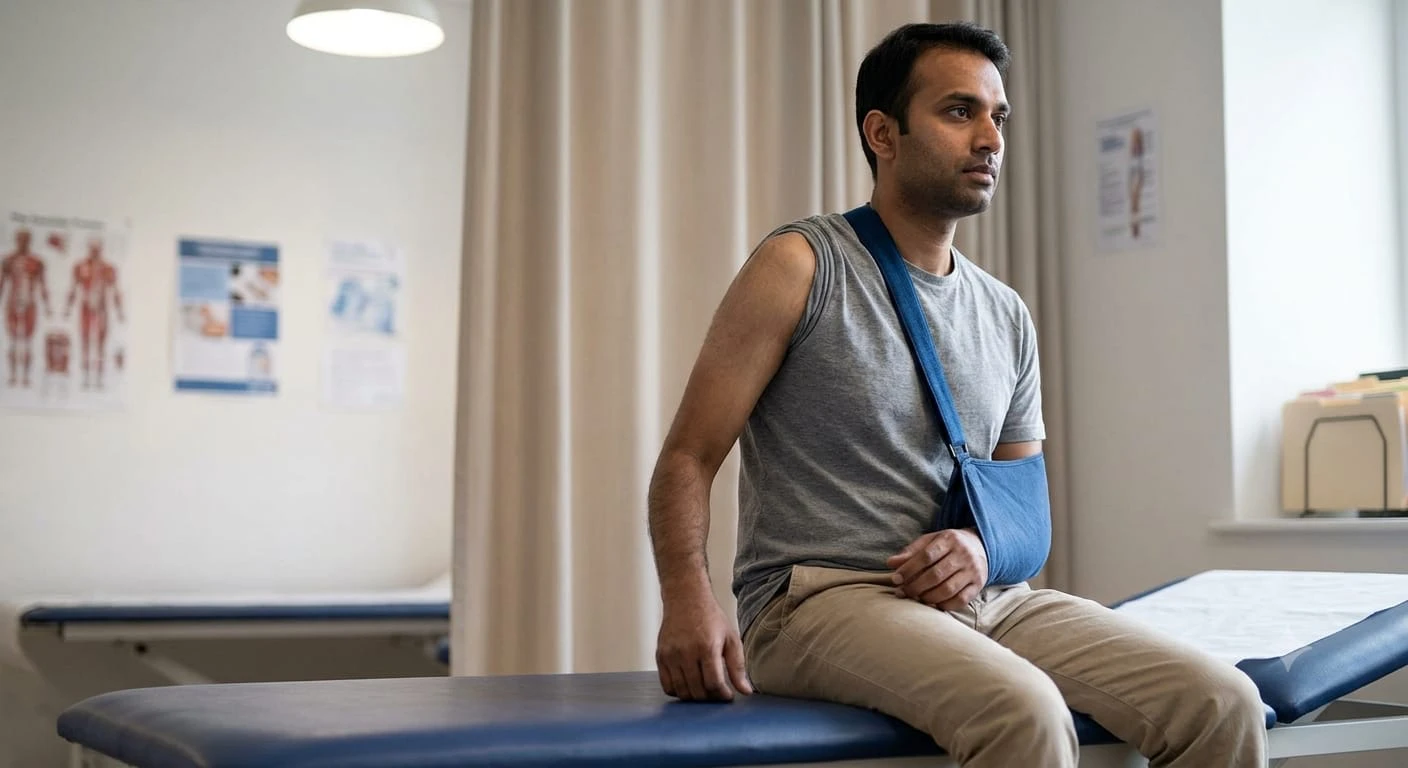
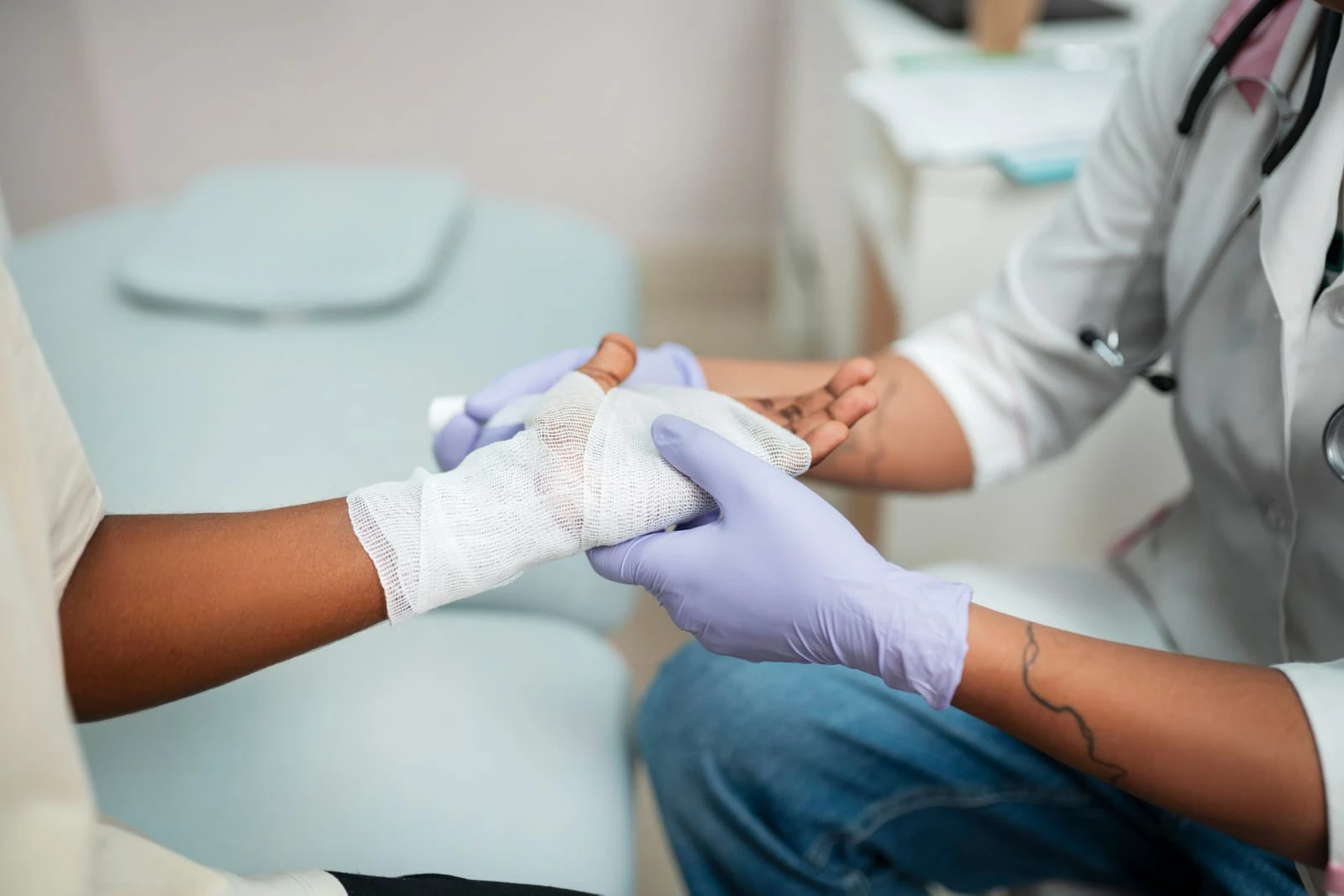
A private conversation about what's possible.
Forty-five minutes with Dr. Dave. A clinical examination. 3D imaging where relevant. A written plan and transparent quote. No obligation, no upsell — just an honest discussion of your options.