Before

After

Hand & Limb
Heel reconstruction with a flap
The flap took and the heel healed with a stable, weight-bearing surface. The limb was preserved.
5 weeks post-op
A surgeon-led, multidisciplinary approach to the diabetic foot — clearing infection, closing wounds and rebuilding soft tissue so that, wherever possible, the foot is saved rather than amputated.
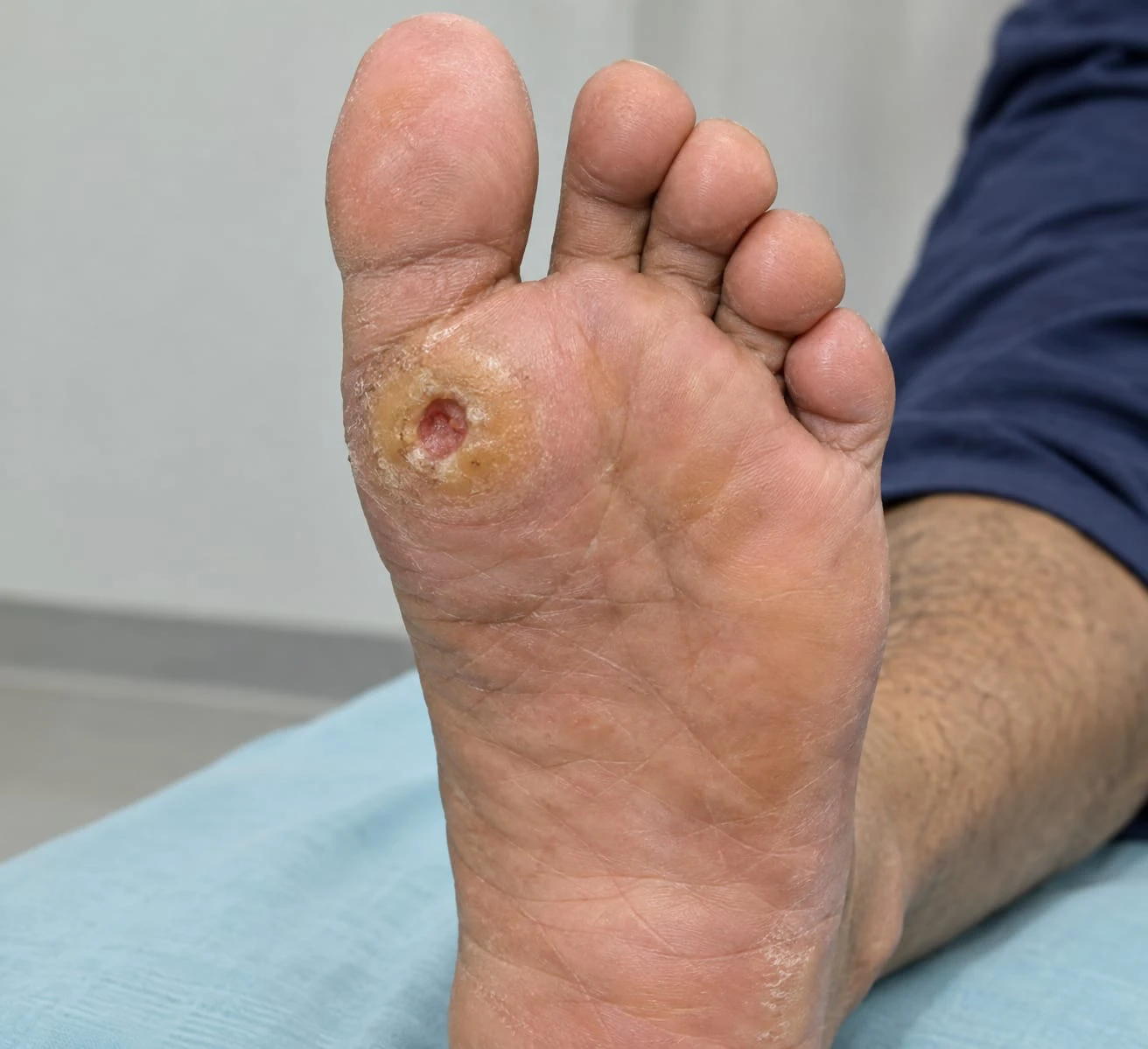
Diabetic foot surgery is the surgical management of the non-healing wounds, infections and tissue loss that develop in the feet of people living with diabetes. Years of raised blood sugar damage the small nerves and blood vessels of the foot, so a patient may not feel a blister or a stone in the shoe, and the wound it causes struggles to heal. Left unchecked, a minor ulcer can deepen, become infected, reach bone and threaten the entire limb. The aim of treatment is limb salvage — saving as much functional, walking foot as is safely possible rather than resorting to major amputation. This is rarely a single operation. It usually means a staged plan: removing dead and infected tissue (debridement), draining abscesses, controlling infection with targeted antibiotics, and working alongside vascular and diabetes colleagues to restore blood flow and stabilise sugars. Once the wound is clean and perfused, the plastic-surgical work of closing it begins — skin grafts, local flaps or, in difficult cases, free-tissue transfer using microsurgery. India carries one of the world's largest diabetes burdens, // VERIFY and the diabetic foot is one of the most common reasons for avoidable hospital admission and amputation in Gujarat. Dr. Aniket Dave approaches each foot honestly: some wounds heal fully, some need ongoing care, and a small number cannot be saved — but timely, well-coordinated surgery gives the foot its best chance.
Diabetic foot surgery is considered for patients whose foot wounds, infection or tissue loss will not resolve with dressings and medical care alone.
The diabetic foot is never treated in isolation. Dr. Dave works within a multidisciplinary pathway — diabetologist, vascular surgeon, microbiologist, podiatrist and wound-care nurse — because a flap will fail on a foot with poor blood flow or uncontrolled sugars. The sequence matters: first make the foot safe and clean, then confirm the blood supply (with revascularisation by the vascular team if required), then reconstruct. Dr. Dave's reconstructive ladder runs from simple skin grafts and local flaps to microsurgical free flaps for the largest defects, always choosing the simplest option that will durably heal the wound and tolerate walking. Offloading — total-contact casts, special footwear, or temporary non-weight-bearing — protects the repair while it matures. Surgery is performed in a fully equipped operating theatre with consultant anaesthesia.
How a typical limb-salvage pathway unfolds — most patients need more than one stage.
Wound mapping, pulse and Doppler checks, X-rays or MRI for bone involvement, and swabs or tissue samples for culture.
All dead, infected and non-viable tissue is surgically removed back to healthy, bleeding tissue — repeated over sittings if needed.
Abscesses are drained, infected bone is addressed, and targeted antibiotics are given on the microbiologist's advice.
If the foot is poorly perfused, the vascular team performs angioplasty or bypass before reconstruction is attempted.
Negative-pressure (VAC) dressings and dressing changes encourage clean granulation tissue over days to weeks.
Once clean and perfused, the wound is closed with a skin graft, local flap, or microsurgical free flap as the defect demands.
Casts or protective footwear keep weight off the repair, and a graded return to walking is planned with the podiatry team.
Strict non-weight-bearing, limb elevation and close wound and flap monitoring. Blood sugars are tightly controlled in hospital.
Skin grafts settle and flaps stabilise. Dressing changes continue; many patients move to outpatient or home wound care.
Sutures removed and the wound matures. Protective footwear or a cast allows cautious, partial weight-bearing as advised.
Most reconstructions are durably healed. A gradual, monitored return to normal walking begins under podiatry guidance.
Lifelong foot protection, daily inspection and regular review to prevent the next ulcer — the single most important factor in keeping the foot.
Published with the patient's written consent and shown unretouched. Graphic photographs stay hidden until you choose to view them.
The flap took and the heel healed with a stable, weight-bearing surface. The limb was preserved.
Many diabetic-foot admissions and reconstructions qualify for medical insurance cover.
Diabetic foot care in Ahmedabad costs a wide range because the work ranges from a single debridement to a multi-stage limb-salvage with microsurgical reconstruction and a hospital stay. A simple ulcer debridement and dressing sits at the lower end; a free-flap reconstruction with intensive wound care and rehabilitation sits at the upper end. Because this is medically necessary treatment for a recognised complication of diabetes, many cases are covered by health insurance and government schemes — our team helps with documentation and pre-authorisation. You receive a clear, itemised estimate at consultation covering surgeon fees, anaesthesia, theatre, dressings, hospital stay and follow-up.
Limb salvage in diabetes carries real risks, and Dr. Dave is honest about them: the diabetic foot is one of the hardest reconstructive challenges in surgery, and not every wound can be saved.
Forty-five minutes with Dr. Dave. A clinical examination. 3D imaging where relevant. A written plan and transparent quote. No obligation, no upsell — just an honest discussion of your options.