Lymphoedema Surgery in Ahmedabad by Dr. Aniket Dave
Vessel-level surgery for chronic arm and leg swelling — lymphaticovenular anastomosis, lymph node transfer and debulking for advanced disease, planned around your stage and your symptoms.
- Duration2 – 6 hours
- Recovery2 – 4 weeks limited use
- AnaesthesiaGeneral
- DowntimeCompression resumes early
The procedure, explained.
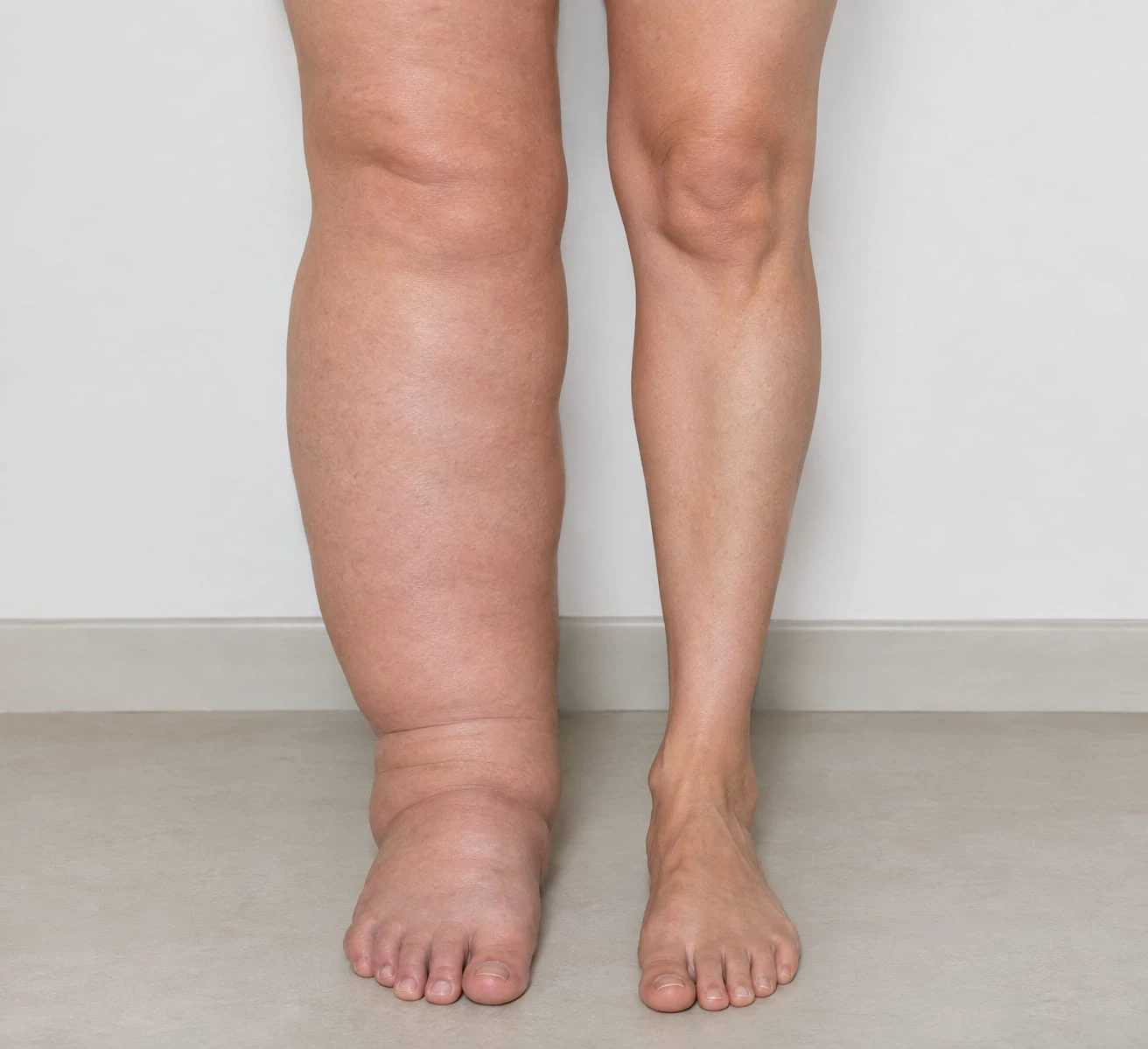
Lymphoedema is the chronic, progressive swelling that occurs when the lymphatic system can no longer drain fluid from a limb. Once it sets in, it tends to worsen: soft, pitting swelling slowly becomes firm and fibrotic, the skin thickens, and the limb becomes prone to repeated attacks of cellulitis. In Ahmedabad and across Gujarat, two causes dominate. The first is treatment for cancer — most often arm swelling after breast-cancer surgery and axillary node clearance, or leg swelling after pelvic surgery and radiotherapy. The second is filariasis, a mosquito-borne infection still seen in parts of India, which damages the lymphatics over years. Surgery for lymphoedema is not a cure — there is no operation that restores a lymphatic system to normal. What modern surgery can do is reduce the volume of the limb, slow or halt progression, and dramatically cut the frequency of infections, so the limb becomes lighter, more comfortable and easier to manage. Dr. Aniket Dave offers the full range: super-microsurgical lymphaticovenular anastomosis (LVA) for earlier disease, vascularised lymph node transfer (VLNT) for more established cases, and debulking by liposuction or excision where the limb has become fibrotic and fatty. Surgery always sits alongside, not instead of, conservative therapy — compression and manual lymphatic drainage remain lifelong companions to any operation.
Is this procedure right for you?
Suitability depends far more on the stage of the disease than on how large the limb looks. A careful assessment — including lymphoscintigraphy or ICG lymphography — guides which operation, if any, will help.
- Arm swelling after breast-cancer surgery, node clearance or radiotherapy
- Leg swelling after pelvic cancer treatment or groin node surgery
- Filarial lymphoedema of the leg or scrotum from past infection
- Early to moderate disease (ISL stage I – II) where vessels are still patent
- Advanced, fibrotic limbs (ISL stage II late – III) suited to debulking
- Recurrent cellulitis episodes despite good compression therapy
- Patients already committed to compression and manual lymphatic drainage
- Stable cancer status and fitness for anaesthesia
Stage the disease first. Then choose the operation.
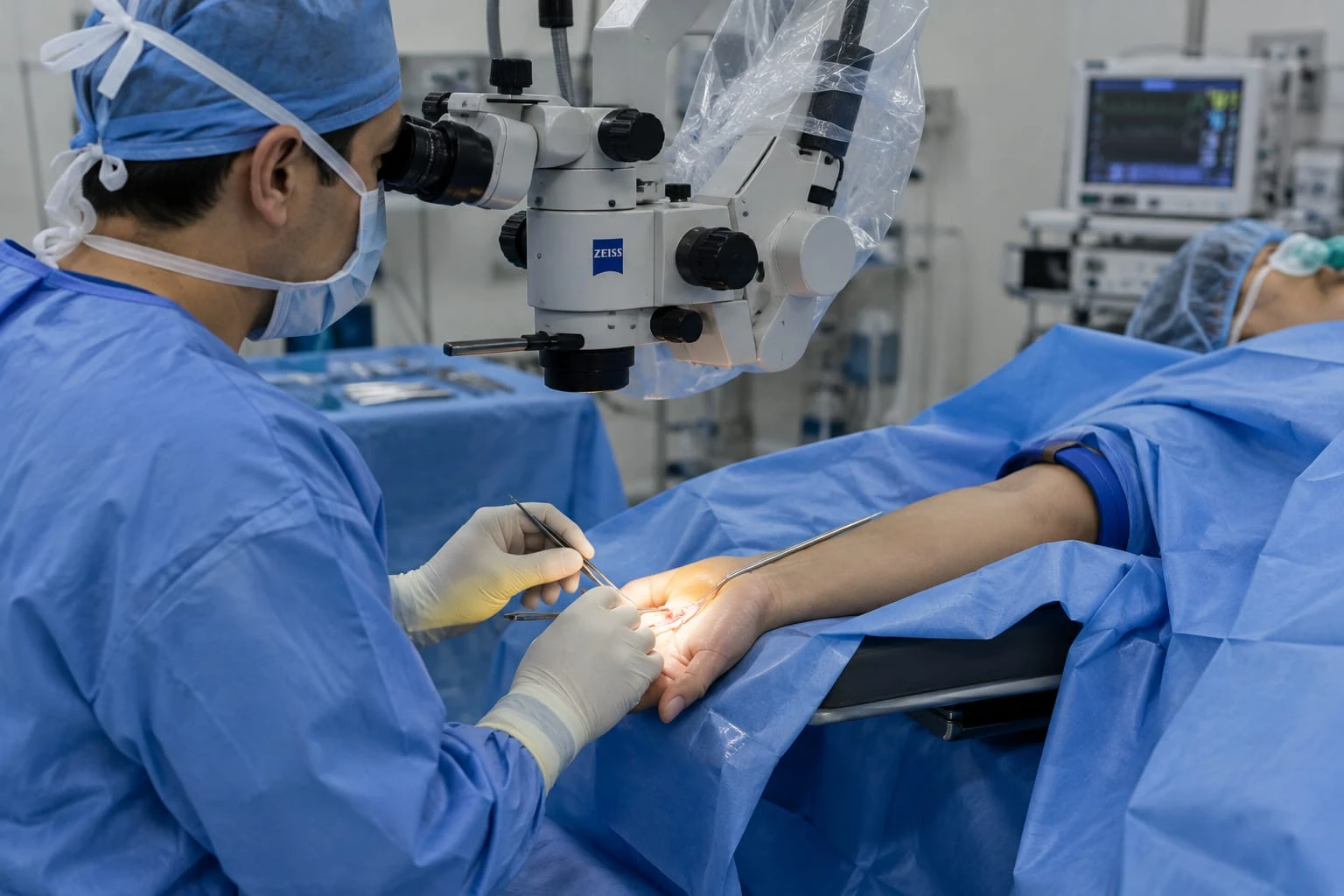
The single biggest mistake in lymphoedema care is offering everyone the same operation. The lymphatics in an early, soft limb behave nothing like those in a limb that has been swollen and fibrotic for fifteen years. Dr. Dave begins with imaging — ICG lymphography to map functioning channels and lymphoscintigraphy to grade drainage — then matches the technique to the biology. Earlier disease with patent vessels does well with LVA, where lymphatic channels under a millimetre wide are joined to tiny veins under the operating microscope. More established disease may need a vascularised lymph node transfer to import new drainage. A limb that has become solid and fatty will not shrink from anastomoses alone and is better served by debulking. Often the honest answer is a staged plan over months, and sometimes it is that conservative therapy remains the right course. Surgery is performed in a JCI-grade theatre with consultant anaesthesia.
What happens on the day.
What happens on the day, step by step. The exact sequence depends on which operation your stage calls for.
- 01
Imaging and mapping
ICG lymphography injected at the fingers or toes maps live lymphatic channels and marks the best sites for anastomosis.
- 02
General anaesthesia
Administered by a consultant anaesthetist. Long microsurgical cases are planned with care for positioning and warmth.
- 03
Small access incisions
For LVA, several short incisions are placed over mapped channels — the surgery is precise rather than large.
- 04
Super-microsurgical anastomosis
Lymphatic vessels under 0.8 mm are joined to nearby venules under high magnification using sutures finer than a hair.
- 05
Lymph node transfer (selected cases)
A vascularised packet of lymph nodes — often from the groin or trunk — is moved into the limb and its blood supply reconnected.
- 06
Debulking (advanced limbs)
Where the limb is fibrotic and fatty, liposuction or staged excision removes excess tissue to restore shape and weight.
- 07
Dressings and early compression
Light dressings are applied and a compression regimen is restarted carefully in the early days, guided by the wound.
A realistic recovery, day by day.
Limb elevated, light dressings, minimal pain after LVA. Anastomosis sites protected; gentle mobilisation begins.
Sutures and dressings reviewed. Compression garments reintroduced under guidance. Desk work usually possible.
Return to most daily activity. Manual lymphatic drainage resumes. Heavy lifting and strain still avoided.
First measurable volume changes typically apparent. Garment fit reassessed as the limb settles.
Fuller benefit emerges — reduced volume, fewer cellulitis episodes. Lifelong compression and review continue.
Transparent pricing, no surprises.
Range depends on technique and the number of anastomoses or stages required.
Lymphoedema surgery is priced by what the limb actually needs, and that varies widely. A single-session LVA with a few anastomoses sits at the lower end; a vascularised lymph node transfer or a staged programme combining microsurgery with debulking sits higher. Specialised imaging, microscope time and longer theatre lists all add to the cost of these cases. We give a transparent, itemised quote at consultation — covering surgeon fees, anaesthesia, OT and microscope charges, imaging, hospital stay, compression garments and follow-up — and we are honest when a stage or two of conservative therapy is the wiser first step.
- Technique — LVA, lymph node transfer or debulking
- Number of anastomoses performed
- Single procedure vs a staged plan over months
- ICG lymphography and lymphoscintigraphy imaging
- Microscope and longer theatre time
- Compression garments and post-op therapy
Honest pre-op disclosure.
Lymphoedema surgery is generally safe, but it is reconstructive surgery on an already vulnerable limb, and expectations matter as much as the operation. Dr. Dave will discuss these honestly at consultation.
- Incomplete reduction — surgery improves, it does not cure, lymphoedema
- An anastomosis may fail to stay open, limiting benefit
- Donor-site swelling after lymph node transfer (carefully screened to minimise)
- Wound healing problems or infection in a compromised limb
- Contour irregularity or recurrence of bulk after debulking
- Anaesthesia-related risks (screened pre-op)
6 specific commitments for lymphedema surgery.
- M.Ch Plastic Surgery with dedicated microsurgery and super-microsurgery training
- Full range offered — LVA, vascularised lymph node transfer and debulking
- Stage-led planning using ICG lymphography and lymphoscintigraphy
- Experience with both post-cancer and filarial lymphoedema seen across Gujarat
- Works alongside physiotherapists and lymphoedema therapists for compression and MLD
- Personal post-op WhatsApp access and long-term follow-up
Questions patients ask about lymphedema surgery.
You might also consider

A private conversation about what's possible.
Forty-five minutes with Dr. Dave. A clinical examination. 3D imaging where relevant. A written plan and transparent quote. No obligation, no upsell — just an honest discussion of your options.