Brachial Plexus Injury: Why Early Surgery Matters
After a road accident or birth injury, the surgical window is narrow. What the brachial plexus does, the warning signs, and why early referral changes outcomes.
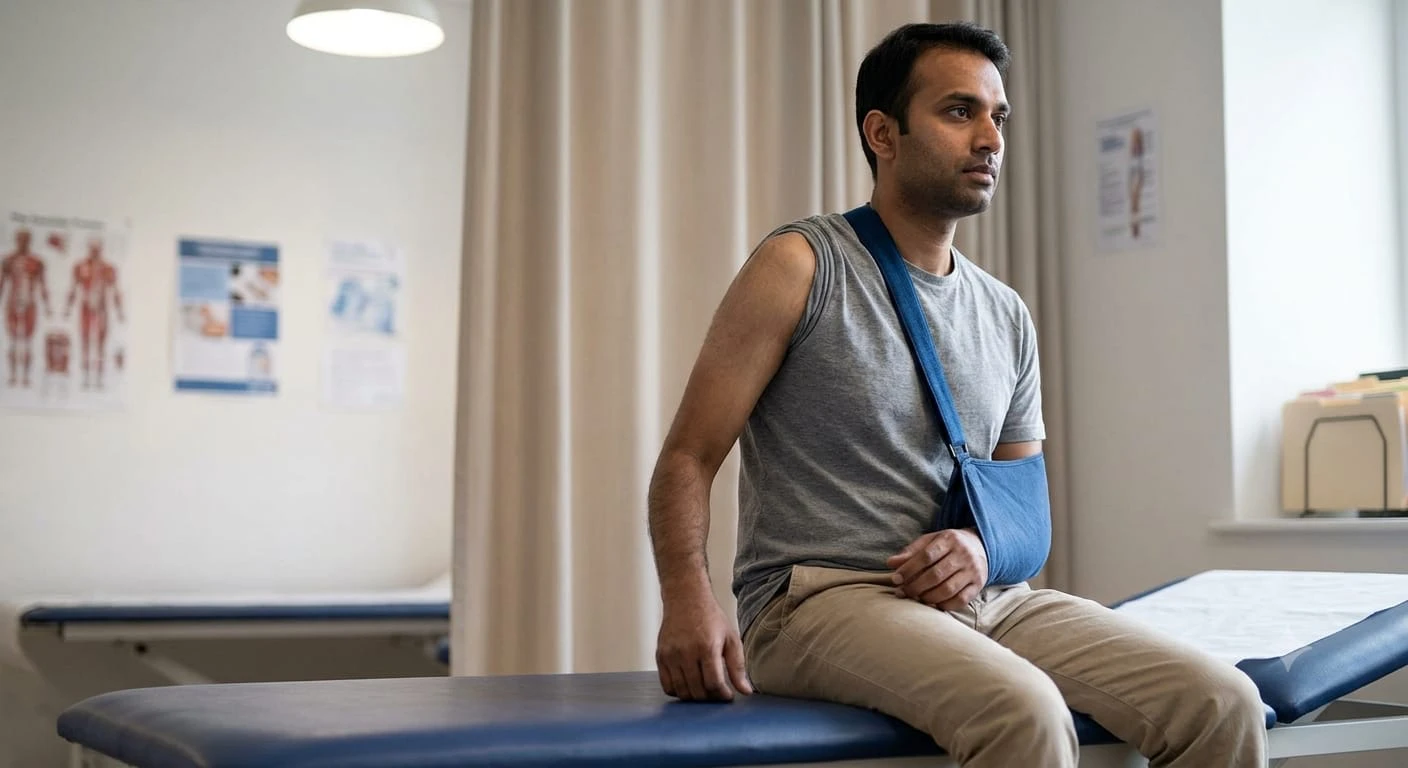
A young man comes off his motorbike on the Sarkhej–Gandhinagar highway. He walks away from the wreck with a sore shoulder and an arm that hangs limp at his side. Everyone is relieved he is alive. For the next few weeks the family waits, hopeful, for the arm to "wake up" on its own.
That waiting is the most dangerous part. For a brachial plexus injury, time is not neutral. Every month that passes without expert assessment is a month of nerve and muscle quietly losing the ability to recover. This guide explains what the injury is, why the surgical window is so narrow, and why an early opinion — even just an opinion — can change the rest of a person's life.
What the brachial plexus is, and what it controls
The brachial plexus is a dense network of nerves that begins at the spinal cord in the neck and travels through the shoulder into the arm. Think of it as the electrical wiring loom for the entire upper limb. Five nerve roots emerge from the spine, then split, join, and re-divide into the nerves that power the shoulder, elbow, wrist, and hand.
When this wiring is stretched, torn, or ripped out of the spinal cord, the signals stop arriving. Depending on which part is damaged, a person may lose:
- The ability to lift the arm at the shoulder.
- The ability to bend the elbow — often the first goal surgeons fight to restore.
- The ability to straighten the wrist, leaving a "drooping" hand.
- Grip and fine finger movement.
- Sensation, so the limb feels numb or foreign.
A complete injury can leave the entire arm flail and lifeless. A partial injury may affect only the shoulder and elbow, or only the hand. The pattern matters enormously, because it guides both the urgency and the type of surgery.
How these injuries happen
In adults across Gujarat and India, the overwhelming cause is road trauma — especially two-wheeler accidents. When a rider is thrown and the head is forced one way while the shoulder is driven the other, the nerve roots take a violent stretch. In the worst cases the roots are avulsed — pulled clean out of the spinal cord — which is the most severe form of injury. High-speed falls, industrial machinery, and heavy crush injuries cause similar damage.
In newborns, the injury happens during a difficult delivery — usually when the baby is large, the labour is obstructed, or the shoulder gets stuck behind the mother's pelvis (shoulder dystocia). The nerves stretch as the baby is delivered. This is called obstetric or birth-related brachial plexus palsy, and the classic sign is a newborn who does not move one arm, holds it turned inward, and lacks a normal grasp on that side.
The two groups could not look more different — a grown accident victim and a sleeping infant — but the underlying biology, and the importance of acting early, is the same.
Why the surgical window is critical
This is the single most important message in this article, so we will state it plainly.
Nerves regrow slowly — roughly a millimetre a day. While the surgeon waits, the muscles those nerves are meant to reach are starving for a signal. After about 12 to 18 months without reconnection, those muscles can become permanently scarred and can no longer be revived, no matter how perfectly the nerve is later repaired.
Because the nerve has to grow a long distance from the neck down to the muscle, the repair has to be done early enough for the signal to arrive before the muscle dies. In practice:
- For sharp, clean lacerations, repair is often done within days.
- For stretch injuries that may recover partly on their own, surgeons watch carefully but usually intervene if there is no meaningful recovery by three to six months.
- Results decline sharply after about six months, and reconstruction beyond roughly a year often delivers far less.
- In babies, the decision point is similar — typically assessed by three months of age, with surgery often performed between three and nine months when recovery stalls.
The cruel part is that the limb does not look like an emergency. It is not bleeding. It is not in obvious danger. So families wait — and the window closes silently. Waiting and watching indefinitely is itself a decision, and often the wrong one.
Warning signs that need an urgent referral
Please seek an expert plastic or reconstructive surgeon's opinion quickly if, after an accident or birth, you notice:
- An arm that is completely limp or hangs without movement.
- Inability to bend the elbow or lift the shoulder weeks after the injury.
- A hand with no grip, or fingers that will not move.
- Numbness, or a limb that feels like it does not belong.
- In a newborn: one arm kept still, turned inward, with no reflex grasp.
- Severe burning or crushing pain in the arm after trauma.
You do not need to wait for a referral to filter down through several doctors. If recovery is not clearly underway within a few weeks, ask directly to be sent to a brachial plexus or peripheral nerve specialist. An early opinion costs little. A late one can cost the use of an arm.
How the injury is diagnosed
A specialist builds the picture from three sources:
- Clinical examination. The surgeon tests every muscle group and maps exactly which movements and sensations are lost. This is repeated over visits to see whether anything is recovering on its own.
- Nerve conduction studies and EMG. These electrical tests measure whether signals are reaching the muscles and help distinguish a nerve that may recover from one that is severed or avulsed. They are most informative a few weeks after injury.
- Imaging — MRI, and sometimes CT myelography. These scans look directly at the nerve roots near the spine and can reveal whether roots have been torn away — a finding that changes the entire surgical plan.
Together these tell the surgeon what is damaged, how badly, and whether time alone is likely to help — which is exactly the information needed to decide if and when to operate.
What surgery can do
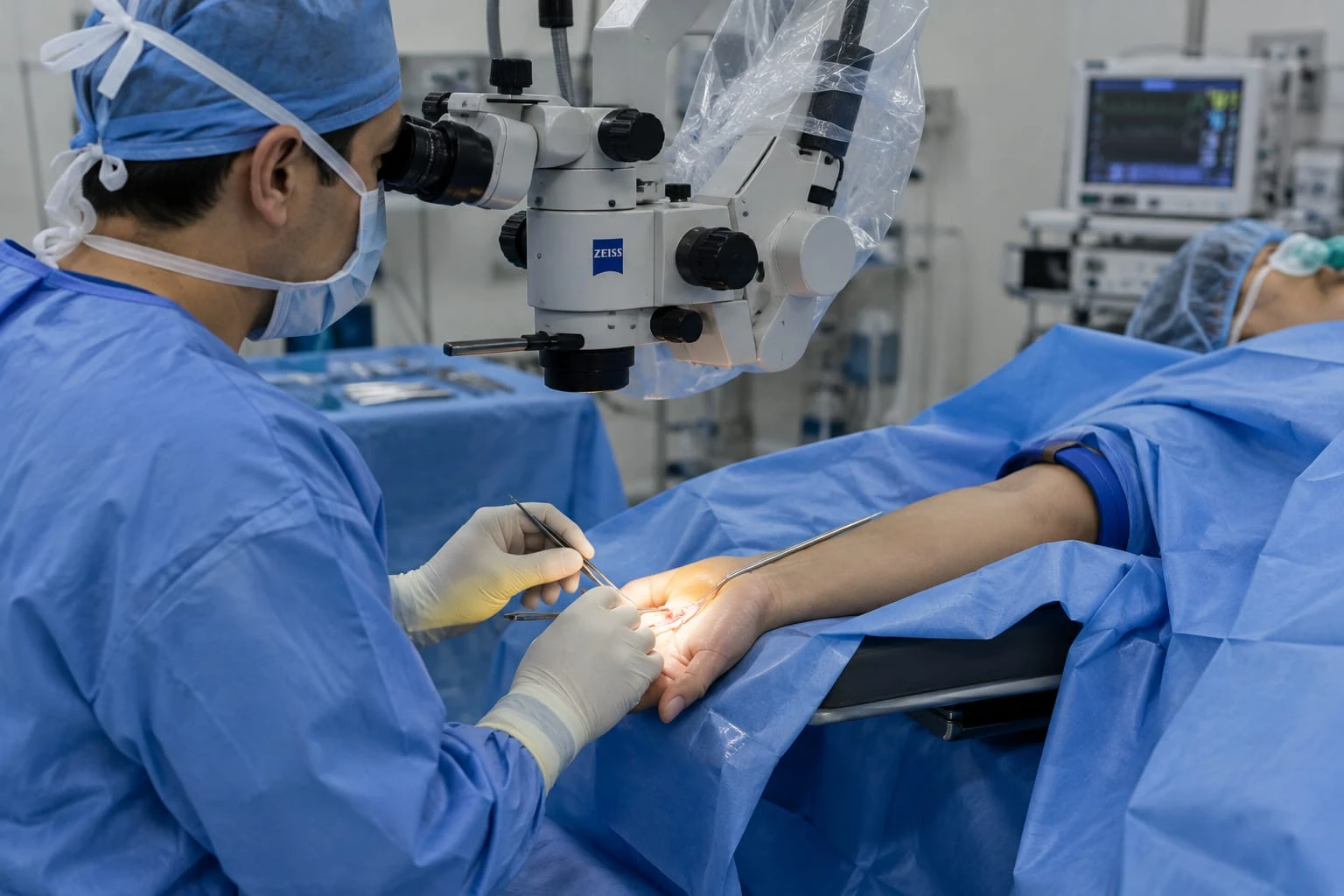
There is no single operation for brachial plexus injury. The reconstruction is tailored to the pattern of damage, and a surgeon may combine several techniques in one or more stages.
- Nerve grafting. When a section of nerve is destroyed, a graft (often a less-important sensory nerve taken from the leg) bridges the gap so fibres can grow across.
- Nerve transfers. When a root is avulsed and cannot be repaired directly, a working nerve nearby is rerouted to power a critical movement. The well-known Oberlin transfer redirects a few fibres from a wrist-flexor nerve to restore elbow bending — frequently the first priority.
- Free functioning muscle transfer. When too much time has passed and the original muscles are no longer viable, a healthy muscle (commonly the gracilis from the thigh) is transplanted with its own nerve and blood supply and reconnected to restore movement such as elbow flexion or basic grip.
- Secondary tendon and muscle transfers. Later in the journey, tendons from still-working muscles can be repositioned to improve shoulder stability, wrist position, or hand function, and joints can be balanced.
The right combination depends on the patient's age, the time since injury, and exactly which nerves survived.
Realistic goals and the long road of rehabilitation
Honesty matters here. Brachial plexus surgery is reconstruction, not a reset button. The aim is not always a perfectly normal arm — it is to restore the most valuable functions, in order of importance.
Surgeons generally prioritise:
- Elbow flexion — the ability to bring the hand to the mouth and body. This is the single most life-changing function.
- Shoulder stability — so the arm can be positioned and does not hang as dead weight.
- Hand and grip function — the hardest to recover, especially when surgery is delayed.
Recovery is measured in months and years, not weeks. After surgery, the regrowing nerve still has to travel slowly to its muscle before any movement appears — often six months to a year before the first flicker. That is why physiotherapy is not optional. Daily stretching keeps joints supple while waiting for nerves to arrive, and dedicated rehabilitation retrains the brain to use rerouted nerves. Children and families commit to years of therapy. The patients who do best are almost always those who were referred early and stayed committed to rehabilitation.
Many people regain a genuinely useful arm. Some regain near-normal function, particularly with early treatment. Others achieve partial recovery — enough to assist the good arm, to hold and stabilise, to live more independently. Even partial recovery, achieved in time, is profoundly worth it.
A final word to families
If someone you love has a limp or weak arm after a road accident, or a newborn who will not move one arm, please do not settle into hopeful waiting. The body will not always announce the urgency, but the clock is running from the day of injury.
You are not committing to surgery by seeking an opinion. You are simply giving an expert the chance to look while it still matters. The difference between an arm seen at one month and an arm seen at one year can be the difference between a working hand and a permanently still one.
If you are anywhere in or around Ahmedabad and facing this, reach out for an early consultation. Bring any scans, accident records, or birth notes you have. The most important step is also the simplest — be seen early, while there is still everything to play for.
Have a question about this article or a procedure? Contact the clinic or book a private consultation.